
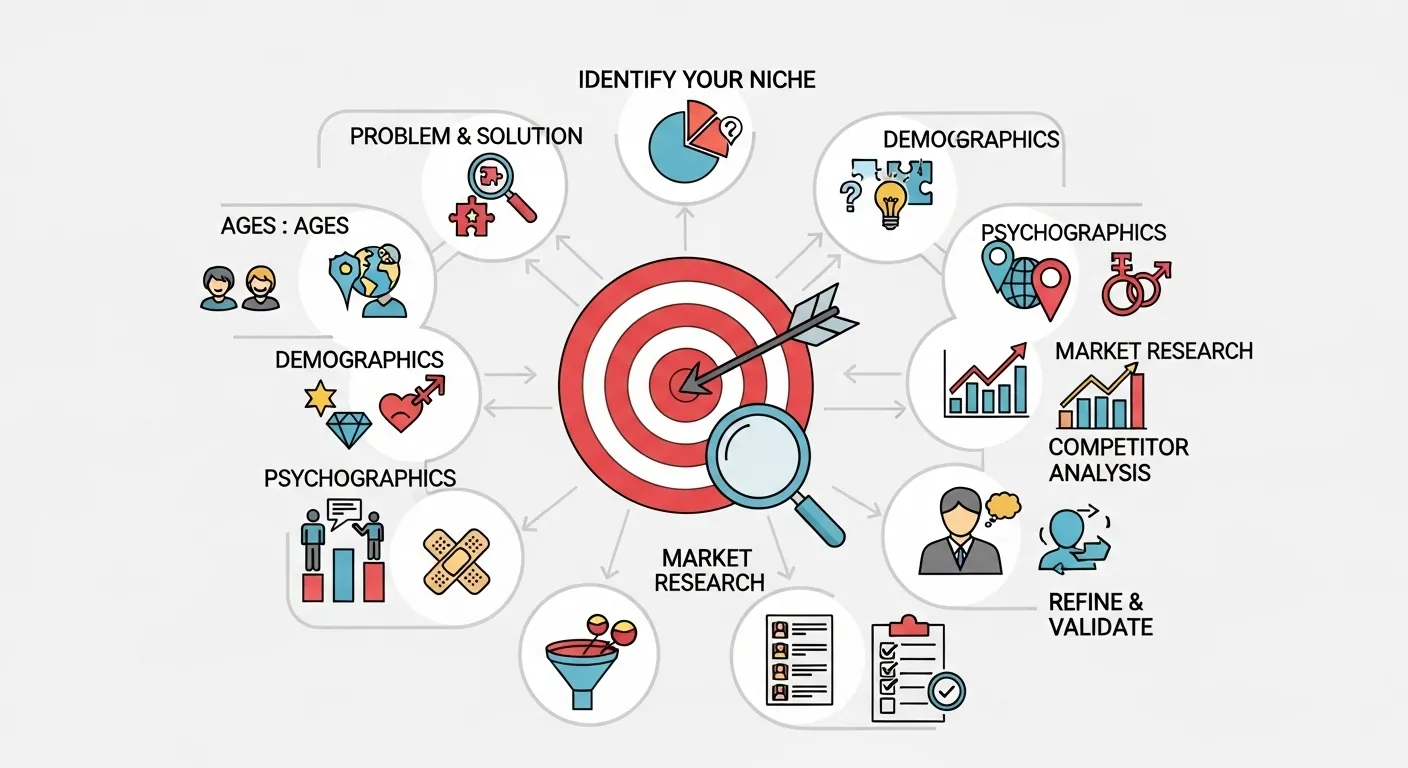
How to Choose a Target Audience for Your Online Course
In a world where online education is rapidly gaining momentum, creating your own online course becomes an attractive opportunity for many experts. However, the success of your course directly depends on one critical element: a clearly defined target audience. Without understanding who your potential students are, their needs, problems, and aspirations, your course may simply get lost among thousands of other offerings. This article will help you step by step to figure out how to choose a target audience for your online course, turning your expertise into a sought-after and successful educational product. Get ready to unlock the potential of your teaching and attract exactly those students who are ready for change!
Why defining your target audience is the foundation of success?
Before diving into the details, let's understand why this stage is so important. A correctly defined target audience for an online course allows you to:
- Create relevant content: You know exactly which student problems need to be solved and what knowledge they need.
- Effectively promote the course: Advertising campaigns will be more precise and less costly, as you appeal directly to interested individuals.
- Increase engagement and trust: Students feel that the course is created specifically for them, which increases their motivation to learn and trust in you as an expert.
- Ensure high sales: People are willing to pay for solutions to their problems and achieving their goals if you clearly show how your course will help them.
Step 1: Analyzing your knowledge and unique offering
Before looking for your audience, look at yourself.
- What are you an expert in? Make a list of topics in which you have deep knowledge and experience.
- What problems can you solve? Think about situations where your knowledge or skills were particularly useful to others.
- What makes your offer unique? Perhaps you have a special methodology, your own experience, an unusual approach?
Step 2: Researching the needs and "pains" of potential students
Now that you understand your offering, it's time to research who needs it.
- Surveys and interviews: Talk to people you think could be your audience. Ask about their challenges, goals, attempts to solve problems, and desired outcomes. Use social media, thematic groups, forums.
- Analysis of online communities: Join groups on Facebook, Telegram, forums where topics related to your expertise are discussed. Pay attention to frequently asked questions, problems people encounter, and the language they use.
- Studying comments and reviews: Analyze comments under articles, videos, reviews for similar courses or products. This is a goldmine of information about what concerns people.
Step 3: Creating a detailed portrait of the ideal student (avatar)
Based on the collected information, create an imagined image of your ideal student. This will help you better understand who you are creating the course for. Give them a name, age, profession.
Include details such as:
- Demographic data: Age, gender, place of residence, marital status, income level, education.
- Psychographic data: Values, interests, hobbies, lifestyle, fears, motivations, goals.
- Behavioral patterns: How they search for information, which social networks they use, how they make purchasing decisions.
- "Pains" and challenges: What problems does your ideal student face in your area of expertise?
- Desired outcomes: What do they want to achieve by taking your course?
Step 4: Competitor analysis and finding a unique niche
Defining your target audience also involves analyzing what is already offered on the market.
- Who are your competitors? Find courses that cover similar topics.
- What do they offer? Study their content, pricing policy, student reviews, strengths, and weaknesses.
- What are the "gaps" in the market? Perhaps there are groups of people whose needs are not met or are met poorly. This is your unique niche.
Step 5: Testing and gathering feedback
Theoretical knowledge about the audience is good, but practice always makes its adjustments.
- Launch a pilot project: Invite a small group of people to test a part of your course or conduct a few free lessons.
- Gather feedback: After testing, actively ask what they liked, what they didn't, what should be added or changed. This will help you refine your target audience portrait and adapt the content.
- Be flexible: The market and people's needs are constantly changing. Be prepared to adjust your strategy and approach to teaching.
Defining a target audience for an online course is not just a marketing exercise, but a strategic step that determines the fate of your educational project. It is the foundation on which all success is built: from content creation to its promotion and sales. By investing time and effort in this process, you will not only attract more students but also build a strong reputation as an expert who truly understands the needs of their audience. Do not ignore this stage, and your online course will surely find its grateful students!